
Preparing for IGCSE Biology can feel overwhelming when students don’t know where to start. This guide explains the syllabus, exam structure, important topics, and a practical study plan used by successful students.
Whether you are beginning the course or revising for exams, this page provides a clear roadmap to help you study smarter.
What is IGCSE Biology?
IGCSE Biology is an internationally recognized secondary science qualification designed for students aged 14–16. The course develops understanding of living organisms, biological processes, and scientific investigation skills.
Students learn how biology applies to everyday life — from human health and genetics to ecology and environmental sustainability.
Key skills developed include:
- scientific analysis
- experimental thinking
- data interpretation
- problem solving
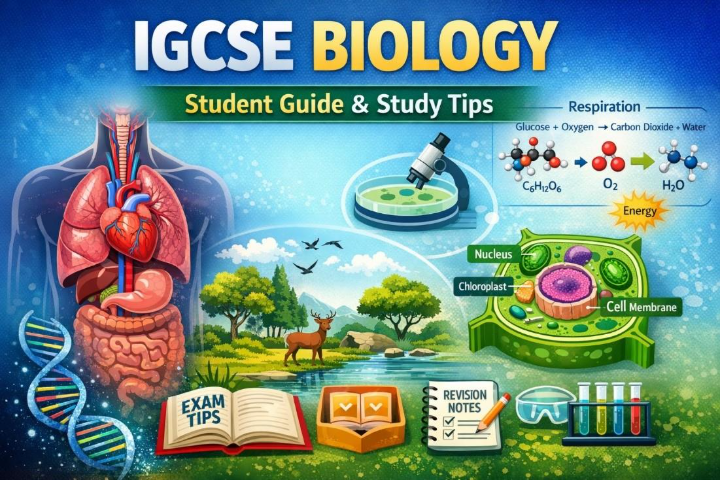
IGCSE Biology Syllabus Overview
The syllabus is divided into interconnected biological themes.
Core Topics Students Study
1. Why Choose This Syllabus
2. Syllabus Overview
Aims
Content Overview
Assessment Overview
Assessment Objectives
3. Subject Content
4. Details of the Assessment
Students may follow either:
- Core Assessment – foundational understanding
- Extended Assessment – deeper biological knowledge
Practical learning includes:
- laboratory safety procedures
- use of scientific apparatus and materials
- data presentation and analysis
- mathematical skills applied in biology
5. What Else Students Need to Know
Before starting IGCSE Biology, students should understand:
- examination entry options
- grading systems
- accessibility considerations
- how grades support progression to advanced courses
Each topic builds conceptual understanding required for exams and advanced science courses.
IGCSE Biology Exam Structure
Most students are assessed through:
- Multiple Choice Paper – tests core knowledge
- Theory Paper – structured written explanations
- Practical or Alternative to Practical Paper – experimental skills
Examiners reward students who explain biological processes clearly rather than memorizing definitions.
How Students Successfully Study IGCSE Biology
Through teaching IGCSE students over multiple academic years, one clear pattern appears — top performers focus on understanding, not memorization.
Effective Study Method
✅ Learn concepts using diagrams
✅ Practice past paper questions weekly
✅ Revise topics regularly instead of cramming
✅ Focus on exam command words
✅ Review mistakes after every test
Many students improve dramatically once they switch from passive reading to active practice.
Student Results & Learning Experience
At The BioKatalyst, students preparing for IGCSE Biology receive structured guidance focused on conceptual clarity and exam techniques.
⭐ Students consistently report:
- improved confidence in Biology concepts
- better exam answer writing skills
- higher test scores after structured revision
- stronger understanding of difficult topics like genetics and respiration
Positive student feedback and academic progress reflect the importance of guided learning and consistent practice.
Add your real testimonials block here — this strengthens SEO trust signals
Common Mistakes in IGCSE Biology Preparation
Many students lose marks because of avoidable errors:
- memorizing without understanding processes
- ignoring diagrams and practical skills
- not practicing past papers early
- writing incomplete explanations
Avoiding these mistakes alone can significantly increase exam performance.
Simple 4-Step IGCSE Biology Study Plan
Step 1 Learn the Concept
Understand the topic using diagrams and examples.
Step 2 Make Short Notes
Summarize processes in your own words.
Step 3 Practice Questions
Solve exam-style questions weekly.
Step 4 Active Revision
Revise weak topics repeatedly before exams.
Consistency matters more than long study sessions.
Why Students Choose IGCSE Biology
Studying IGCSE Biology builds a strong foundation for:
- Medicine
- Biotechnology
- Environmental science
- Biomedical research
- Advanced science qualifications
The subject develops analytical thinking and scientific reasoning valuable beyond examinations.
Frequently Asked Questions (FAQ)
Is IGCSE Biology hard for students?
IGCSE Biology becomes manageable when concepts are understood clearly and students practice exam questions regularly.
How many topics are in IGCSE Biology?
The syllabus covers core areas including cells, human biology, genetics, ecology, and biological processes essential for life sciences understanding.
How can I score high marks in IGCSE Biology?
Focus on understanding processes, mastering diagrams, learning examiner keywords, and solving past papers consistently.
How much time should I study IGCSE Biology daily?
Around 45–60 minutes of focused revision combined with regular practice questions is effective for most students.
Is coaching necessary for IGCSE Biology?
Some students succeed independently, but structured guidance helps clarify difficult concepts and improve exam technique faster.
Final Thoughts
Success in IGCSE Biology comes from understanding how biological systems work and applying knowledge effectively in exams. With structured learning, consistent revision, and guided practice, students can achieve excellent academic results and build strong foundations for future science studies.